
Youth-led Participatory Data for Disability-Inclusive City in Makassar
Makassar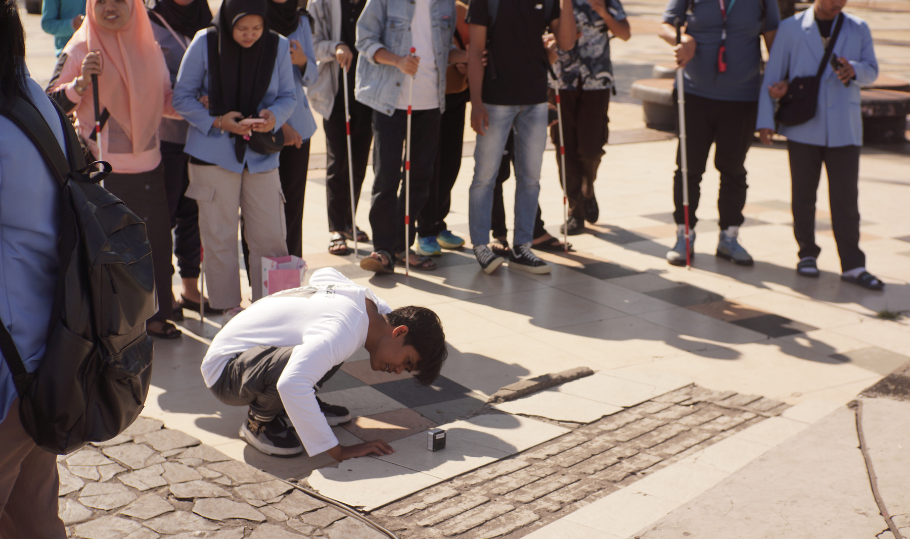
Makassar, the largest metropolitan city in Eastern Indonesia, has experienced rapid urbanization in recent years, ranking 10th among Indonesia's most densely populated cities. The Makassar City Government has shown local commitment to disability inclusion through the development of the Rencana Aksi Daerah Penyandang Disabilitas Kota Makassar 2022–2026 (Regional Action Plan for Persons with Disabilities), which highlighted the lack of comprehensive disability data, planning documents that do not adequately address disability needs, insufficient allocation of budget resources, numerous public facilities that remain inaccessible, and persons with disabilities who face barriers to urban development planning. Additionally, social acceptance of disability inclusion remains limited within government, the private sector, and the community.
To ensure inclusive data collection necessary for planning and to support the rights of persons with disabilities in Makassar, Kota Kita initiated the Makassar Disability-Inclusive City Profile initiative in partnership with UNESCO. The initiative involved the Makassar City Government, particularly the Makassar Regional Development Planning Agency, as a key partner and collaborated closely with Pergerakan Difabel Indonesia untuk Kesetaraan (PerDIK), a Makassar-based organization advocating for people with disabilities in the city.
Building on a long-standing collaboration between Kota Kita and UNESCO, the initiative replicated the participatory data collection process from our previous works in Solo and Banjarmasin (2017-2019), using the geo-tagging method to address the city's disability data gap. The objective of this approach is to demonstrate the use of contextualized data in providing critical insights for evidence-based advocacy that benefits persons with disabilities living in the city.
As part of Kota Kita’s broader Makassar Inclusive City Movement campaign, the program conducts a series of capacity-building workshops for young people with disabilities who represent local organizations in the city. This approach enhances their capacity for evidence-based advocacy, amplifying their voices while fostering collaboration with the government to create an inclusive city. It is anticipated that these efforts will yield technical recommendations to support the implementation of the Regional Action Plan for Persons with Disabilities.
The Makassar Disability-Inclusive City Profile documented 5,171 persons with disabilities living in Makassar, examining their lived experience, challenges, and aspirations. Moreover, the profile excludes the 62 disabled individuals who chose not to participate. A total of 53 young enumerators, aged 20 to 35, collected data through door-to-door surveys across 153 neighborhoods (kelurahan) from June 23 to August 2, 2025. The participatory data collection also includes needs assessment, interviews, observations, geographical analysis, and focus group discussions at the community and city levels. The profile illustrates a deep understanding of the lived experience of persons with disabilities and of the city government's accessibility efforts. The Makassar Disability-Inclusive City Profile serves as a baseline and reference for the city government and other stakeholders to design more inclusive planning and programs, ensuring no one is left behind.
The development of the Makassar Disability-Inclusive City Profile involved multi-stakeholders, including government agencies, organizations of persons with disabilities (OPDs), civil society organizations (CSOs), and persons with disabilities in three phases:
-
Phase 1: Review of existing secondary data and policies related to disability and needs assessments from OPDs and government agencies to identify key disability issues and gaps.
-
Phase 2: Citywide participatory survey where 53 youth enumerators using the digital app Kobo Collect and the geo-tagging method can respond to the gap in disability data in the city and refine inclusive city development, observations, and geographical analysis, two focus group discussions (FGDs), data analysis, and consultation. Furthermore, a three-day capacity-building session on audit accessibility for young representatives of organizations of persons with disabilities (OPDs) further enhances the data. The objective is to evaluate infrastructure using universal design principles. This assessment used tools such as tactile and ramp mock-ups with toy figures and direct measurements of public spaces to identify opportunities for improvement.
-
Phase 3: The development of a disability-inclusive city profile for Makassar, as well as alignment with the Regional Action Plan for Persons with Disabilities.