
Beyond Housing Types: Comparative Study of Urban Poor Settlements for Urban Heat Adaptation (CLARE)
Semarang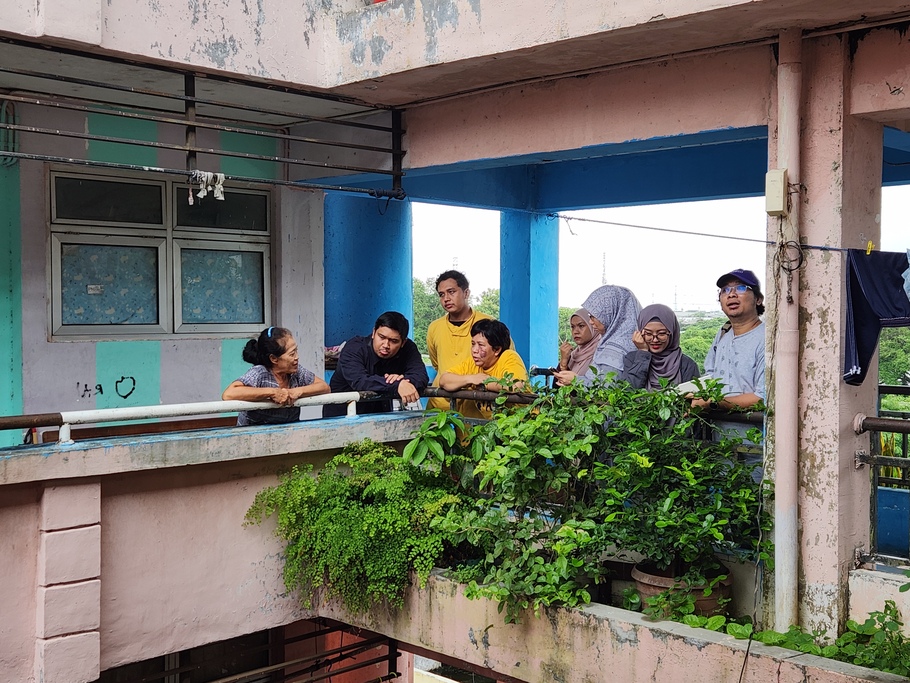
Urban poor communities across Southeast Asia face a serious climate vulnerability. Cities like Jakarta are sinking at alarming rates up to 30 cm annually in some areas, while the temperatures soar. Semarang recorded a staggering 5°C temperature increase over just one decade, reaching 37.8°C in October 2023. For low-income families with insecure housing, inadequate infrastructure, and economic precarity, these escalating climate risks create compounded vulnerabilities that disproportionately affect women, children, the elderly, and people with disabilities.
The response from governments is often to relocate informal kampung communities into vertical public rental flats, citing land scarcity and modernization needs. However, this "solution" often creates new problems. These state-designed flats frequently lack passive cooling, green spaces, and communal areas, transforming them into concrete heat traps that amplify rather than mitigate climate risks. Meanwhile, they sever the strong social networks and spatial adaptability that make traditional kampung settlements remarkably resilient.
Learning from Communities, Not Just Buildings
Kota Kita is part of the "Beyond Housing Types" (Be-Housing) consortium led by Rujak Center for Urban Studies and in collaboration with Arkom Indonesia and Universiti Kebangsaan Malaysia, which is conducting comparative case studies across Jakarta, Surabaya, Semarang (Indonesia), and Selangor (Malaysia). This cross-border collaboration, which is funded by the CLARE ASEAN program, enables us to identify both context-specific and transferable strategies for climate-resilient housing across Southeast Asian cities.
The Be-Housing research project brings together complementary expertise through a regional partnership. Rather than viewing housing purely as physical infrastructure, we're examining how different housing models, kampung kota (urban villages), kampung susun (community-driven vertical housing), and public rental flats, could enable or constrain residents' adaptive capacity to climate risks, particularly extreme urban heat.
This research method combines vulnerability mapping, stratified surveys, focus group discussions, and in-depth interviews through which community members themselves can reflect on findings and distill their coping strategies into actionable insights. By centering their experiences, we capture the intersectional dimensions of climate vulnerability that infrastructure-focused policies miss. This participatory approach recognizes that women, who shoulder disproportionate caregiving and domestic work burdens, hold critical adaptation knowledge often overlooked in conventional urban planning.
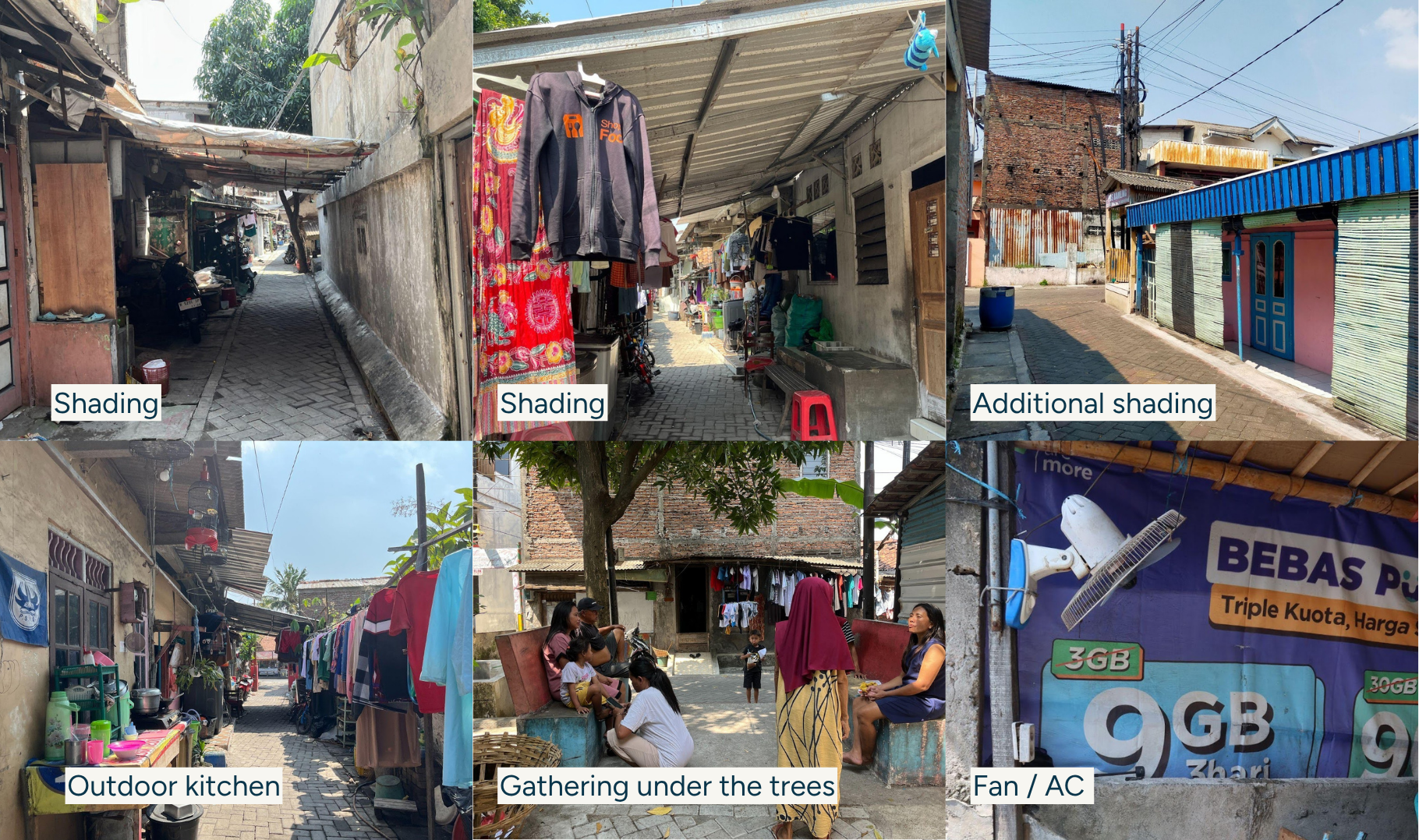
These social networks and spatial adaptability are often lost after relocation.
Expected Impact
Despite significant research on urban poverty and informality, there has been insufficient analysis of how different housing models shape the capacity of urban poor communities to adapt to climate change, especially from gendered and intersectional perspectives. By comparing how different communities survive and thrive amid escalating heat, we're discovering lessons for designing climate-resilient, socially inclusive, and gender-responsive housing where adaptation strategies emerge from lived experience rather than top-down blueprints. Our research project recognizes Kampung Kota as a dynamic adaptation model, not only as nostalgic spaces of resistance.
By the end of the project, the Be-Housing consortium will deliver a city-profiled report with embedded case studies, a practical toolkit, and policy briefs translating research findings into actionable recommendations for climate-responsive housing within urban resilience frameworks. The Be-Housing research project aims to generate academic publications and convene city-level public discussions in each study location, culminating in a national dissemination event to promote knowledge-sharing and inform national-level policy discussions. By acknowledging how the communities thrive, we are learning that we are mutual partners in the pursuit of climate resilience solidarity.